Thinking about a move to Andover for work, a hybrid schedule, or a fully remote setup? You are not alone. Many buyers looking north of Boston want a town that supports both daily convenience and long-term lifestyle fit, and Andover stands out for exactly that reason. In this guide, you will get a practical look at housing, commute options, neighborhood character, and everyday amenities so you can decide whether Andover fits the way you live and work. Let’s dive in.
Why Andover Appeals to Relocating Buyers
Andover is a midsized town about 23 miles north of Boston with roughly 37,014 residents. For many corporate transferees and remote professionals, the draw is balance. You get suburban living with access to transit, major highways, local services, and a strong base for working from home.
The town also shows clear signs of home-office readiness. Census data reports that 98.6% of households have a computer and 97.4% have a broadband subscription. If your work depends on reliable connectivity, that matters right away.
Andover also tends to attract buyers looking for an established market rather than a primarily new-build environment. The owner-occupied housing rate is 79.9%, and the median value of owner-occupied homes is $855,600. That points to a community with many long-term homeowners and a relatively high-cost entry point.
Andover at a Glance
If you are comparing towns, a few numbers help frame what Andover offers.
| Category | Andover Snapshot |
|---|---|
| Population | 37,014 |
| Distance to Boston | About 23 miles north |
| Median household income | $172,606 |
| Mean commute time | 29 minutes |
| Owner-occupied housing rate | 79.9% |
| Median owner-occupied home value | $855,600 |
| Households with broadband | 97.4% |
| Households with a computer | 98.6% |
These figures support what many buyers feel when they start exploring the area. Andover is a professional, established suburban market with the infrastructure many modern households need.
Housing Style and Market Character
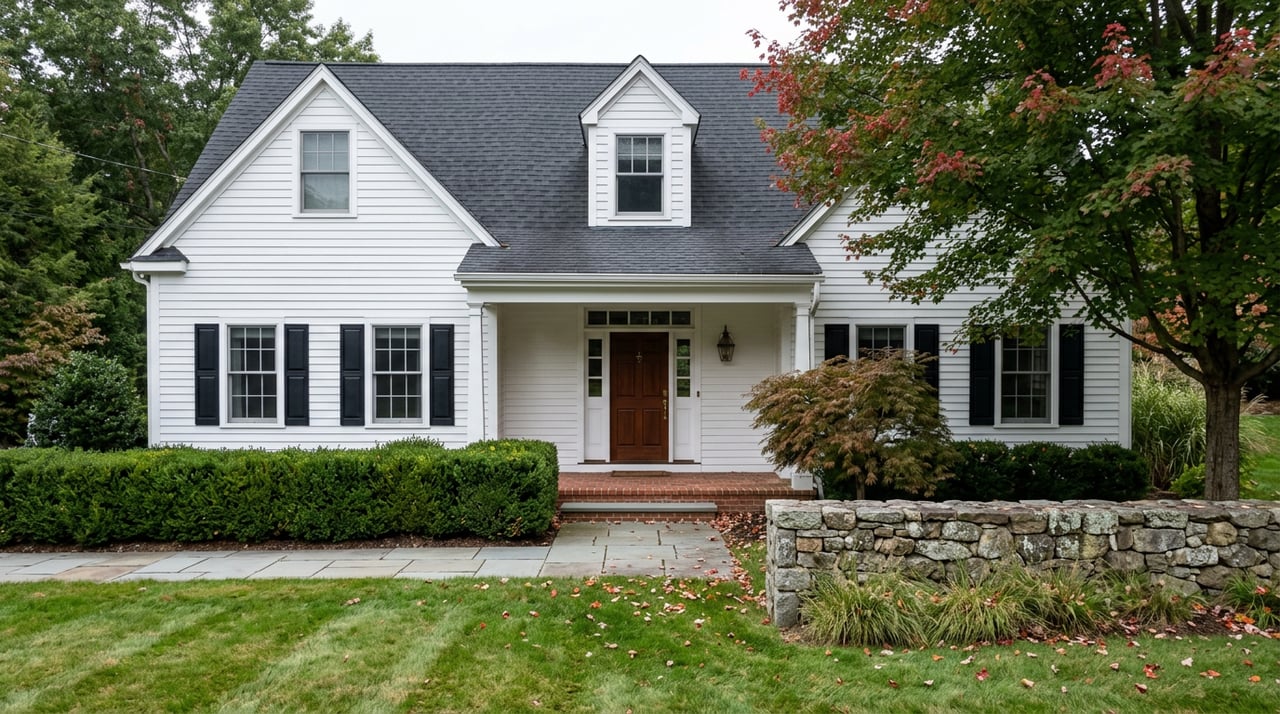
Andover is still mainly known as a single-family suburb, but local planning shows the town is gradually adding more housing choice in select areas. Recent town planning and zoning work has focused on multifamily opportunities in places like Downtown, Ballardvale, and the River Road Corridor. The town also approved a Multifamily Overlay District and updated its ADU rules.
For you as a buyer, that means two things. First, much of Andover’s identity still comes from established single-family neighborhoods and village areas. Second, there may be a growing range of housing options over time, especially near transit, shopping, and employment areas.
The housing stock itself spans a long architectural timeline. Town design guidance references Colonial, Georgian, Federal, Greek Revival, Italianate, Second Empire, and Shingle Style influences, along with later suburban construction. In practical terms, you may see everything from historic homes in older village settings to more typical suburban properties and some newer multifamily options in targeted corridors.
Neighborhood Areas to Know
Andover is often best understood through villages and corridors rather than by large subdivision names. If you are relocating from out of area, that can help you narrow your search more clearly.
Downtown Andover
Downtown is the town’s most walkable area and serves as the center for retail, restaurants, and services. Town planning also identifies part of Downtown, including the Historic Mill District and Shawsheen Plaza, as part of its multifamily zoning conversation.
If you want an in-town feel with easier access to errands and daily services, Downtown is often the first area to consider. It can be especially appealing if you prefer having a town center as part of your routine.
Ballardvale
Ballardvale is one of Andover’s best-known village areas and has roots as the town’s first planned mill community. It is also part of the town’s recent transit and housing planning discussions.
For buyers, Ballardvale can appeal if you are looking for a village setting with historic character and relevance to commuter access. It is often part of the conversation for those who want something distinct from a standard suburban layout.
Shawsheen Village
Shawsheen Village developed as a planned community around the American Woolen Company mills in the 1920s. The area later became home to hundreds of houses and several community buildings.
Today, it is one of the places that helps define Andover’s classic New England feel. If neighborhood character matters to you, Shawsheen Village is worth understanding as part of the town’s broader housing story.
West Parish and Central Areas
West Parish Center is described in town planning as a residential area clustered around West Parish Church. Central Street and Main Street/Locke Street are also part of Andover’s older residential core with architectural importance.
These areas may stand out if you are drawn to established homes and traditional New England streetscapes. For many relocators, they offer a sense of place that feels different from newer suburban developments in other towns.
River Road Corridor
The River Road Corridor is important for a different reason. Town planning identifies it as outside the immediate station area but close to many large employers.
If your work is based elsewhere in the Merrimack Valley or along major roads, this corridor may be worth watching. It can fit buyers who care more about road access and proximity to employment centers than being right in the downtown core.
Commute Options for Corporate Buyers
One of Andover’s biggest strengths is flexibility. The town is bisected by I-93 and I-495, and it also connects through Routes 28, 133, 114, and 125. If your work requires regional travel by car, that road network is a major asset.
Public transportation is also part of the picture. Andover has two commuter rail stations, and the town highlights both rail access and regional bus service as key transportation resources. For corporate buyers with Boston-area travel needs, that creates options that not every suburb can offer.
The mean commute time is 29 minutes, according to Census data. Of course, your actual drive or rail trip will vary based on destination and schedule, but the number gives a useful baseline when comparing Andover to other towns.
What Remote Workers Should Consider
If you work remotely full time or part time, relocation is about more than square footage. You need connectivity, a comfortable daily rhythm, and access to places that make life easier during the workweek.
Andover checks several of those boxes. The town’s broadband and computer-use figures suggest a community well set up for digital work. That is an important practical detail, especially if your job depends on stable home-office conditions.
The town also offers a mix of car-based convenience and local services. In addition to commuter rail and bus access, the free MEVA Route 21 shuttle serves Downtown Andover, Shawsheen Plaza, Route 114 Plaza, Andover Commons, Town Offices, the YMCA, Doctors Park, Frye Circle, and Andover Housing/Morton St.
For some buyers, that local mobility adds value even if they still expect to drive most days. It can make errands and routine trips a little easier, which is often a bigger quality-of-life factor than buyers expect.
Daily Life in Andover
A relocation decision is rarely just about the house. You are also choosing how your day-to-day life will work once the move is over.
Andover offers more than 5,000 acres of public outdoor space and trail access. That includes Ward Hill, AVIS reservations, Harold Parker State Forest, the Shawsheen River, Bay Circuit Trail connections, and Pomp’s Pond as a summer recreation site.
If outdoor access matters to you, this is one of Andover’s strongest lifestyle advantages. You can have a suburban base with meaningful access to open space rather than just small pockets of recreation.
The town also has a strong civic and cultural center. Memorial Hall Library has served residents continuously since 1873 and remains centrally located. Local amenities also include the Addison Gallery of American Art, the Andover Historical Society, and performing arts groups.
Downtown events help reinforce that town-center feel. The local business and cultural office highlights recurring events such as the Summer Downtown Music and Movie series and Andover Day. For many buyers, those details signal a community with an active shared public life.
Education and Community Infrastructure
For households considering long-term fit, it helps to understand the town’s broader infrastructure. Andover includes five elementary schools, three middle schools, and Andover High School. The town also lists Phillips Academy and several private-school options.
Even if schools are not your primary reason for moving, that network is part of how the town functions day to day. It reflects Andover’s role as an established residential community with a substantial local service base.
Is Andover the Right Fit for You?
Andover may be a strong match if you want a north-of-Boston town that supports more than one lifestyle at once. You can find highway access for commuting, rail options for regional travel, strong home-internet adoption for remote work, and a real town center for errands and culture.
It may also appeal if you want a community with established homes, recognizable village areas, and significant outdoor space. At the same time, it helps to go in with clear expectations about price, since Andover is a relatively high-cost market.
For many corporate and remote buyers, the real advantage is flexibility. Andover can support a commute-heavy week, a mostly home-based work schedule, or a hybrid routine that changes from month to month.
If you are weighing a move and want practical guidance on how Andover compares with other Massachusetts suburbs, Sandra Naroian can help you narrow your options and build a relocation plan that fits your goals.
FAQs
What makes Andover, MA appealing for remote buyers?
- Andover offers strong home-office readiness, with 98.6% of households reporting a computer and 97.4% reporting a broadband subscription, along with local services, open space, and a town center that supports daily convenience.
What makes Andover, MA practical for corporate relocations?
- Andover offers access to I-93, I-495, Routes 28, 133, 114, and 125, plus two commuter rail stations and regional bus service, giving many buyers flexibility for both road and rail travel.
Which Andover, MA areas should relocating buyers know first?
- Many buyers start by learning Downtown, Ballardvale, Shawsheen Village, West Parish, Central Street, Main Street/Locke Street, and the River Road Corridor because those areas reflect some of the clearest differences in setting and housing character.
What is the housing market feel in Andover, MA?
- Andover is largely an established single-family market with a 79.9% owner-occupied housing rate and a median owner-occupied home value of $855,600, while local planning is gradually adding more housing choice in selected areas.
What is everyday life like in Andover, MA for new residents?
- Daily life in Andover includes access to over 5,000 acres of public outdoor space, a downtown mix of shops and services, cultural resources like Memorial Hall Library and the Addison Gallery of American Art, and recurring community events such as Andover Day.