On May 5, 2026, the Bolton Conservation Commission sat down to review a proposal for a five-bedroom home off a shared driveway, submitted on behalf of Cote Contracting LLC. The plan included a paved driveway, site grading, and two things that show up on almost every Bolton building application: a private on-site subsurface sewage disposal system and a private bedrock drilled well. A few line items down the same agenda, the Commission signed off on a Certificate of Compliance for a new well and septic installation at 578 Sugar Road, and continued hearings for a proposal on 253 South Bolton Road until the next meeting.
None of this is unusual for Bolton. It's the town's ordinary business, month after month, because Bolton has no public water or sewer system for residential properties. Every household in town gets its water from a well and sends its wastewater to a septic system, a fact the town's own Housing Production Plan states plainly. That single infrastructure gap does more to shape what a Bolton listing looks like, what it costs to close, and what a buyer needs to check before making an offer than almost anything else in the transaction.
The Bylaw That Decides What You Can Build
Most towns set minimum lot sizes around character, setbacks, or density goals. In Bolton, the standard residential lot size of 80,000 square feet, just under two acres, exists in large part because that's how much land a typical parcel needs to support a house on well water with room for a septic system and its reserve area. If you want a lot with less frontage, the bylaw offers a workaround called a backland lot, but the trade is steep: a minimum of 4.5 acres, only 50 feet of street frontage, and once the lot is created it can never be subdivided below that 4.5-acre floor again.
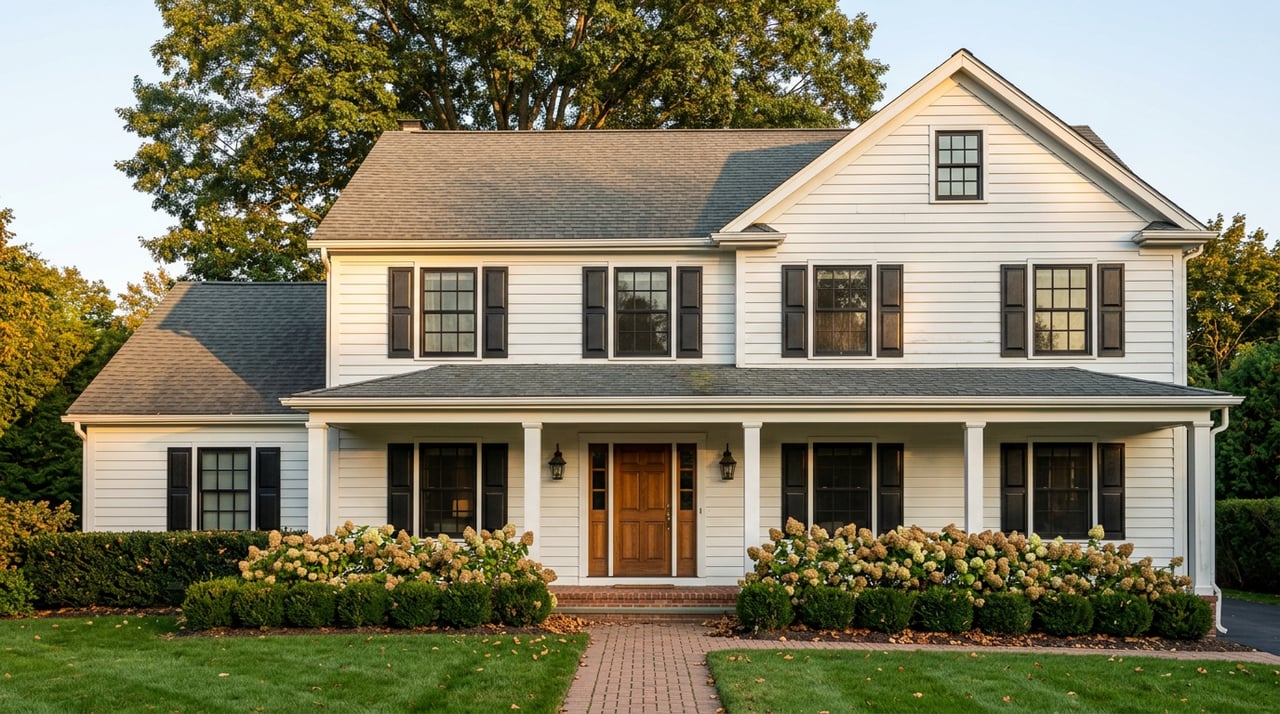
This is why so many Bolton listings lead with acreage instead of square footage. A 3,890-square-foot new build on a "private lot" and a 5,900-square-foot Colonial on 1.66 acres aren't competing on the same axis. The house size tells you what's inside. The lot size tells you whether the land can legally support what's inside, and whether there's room left over if the septic system ever needs to be replaced in a different spot.
Two Different Inspections, Two Different Governments
Anyone who has sold a house in a Massachusetts town with sewer service knows to expect one septic conversation. In Bolton, there are two, and they don't come from the same authority.
The first is Title 5, the state's septic code. Massachusetts law requires a passing Title 5 inspection within two years before closing, and the report goes to both the buyer and the local Board of Health. A comprehensive inspection typically runs somewhere between $400 and $900 depending on the inspector and whether the tank needs pumping first. If the system fails, repairs can range from a few thousand dollars for a distribution box swap up to $30,000 or more for a full system replacement, depending on soil conditions and whether ledge is encountered. The Commonwealth also offers a state income tax credit for septic repairs on a primary residence, spread over several years rather than claimed in one lump sum. The limits on that credit were raised by a 2023 state tax law change, so a seller weighing repair costs should ask a tax professional for the current cap rather than assume an older figure still applies.
The second inspection has nothing to do with the state. Massachusetts has no statewide requirement to test well water at the time of sale. That authority sits entirely with local boards of health, and Bolton's has used it: the town's Board of Health website reminds sellers directly that the well must be tested before a home sale closes. It's a rule a buyer moving from a town on municipal water would have no reason to expect, and it's easy to miss if you're only budgeting for the Title 5 report.
The practical upshot for anyone selling in Bolton this fall: two separate inspectors, two separate reports, and two separate timelines to build into a listing schedule. Neither one is optional, and neither one is covered by a standard home inspection.
One more wrinkle worth knowing if the home you're buying or selling is older. Bolton does have some properties on cesspools rather than modern septic systems, and cesspools face a tougher bar under Title 5. They don't automatically fail an inspection, but any cesspool showing signs of hydraulic failure or sitting too close to a water supply will need to be upgraded before the sale can close.
What the FOSPRD Workaround Actually Buys You
Not every Bolton neighborhood sits on 2-acre-plus lots. If you've toured homes in Tadmor, off Goose Pond Path near the Department of Public Works facility, or in Keyes Farm, off Moderator Way near Hudson Road, you've seen tighter lot lines than the standard zoning would normally allow. Both were built under Bolton's Farmland and Open Space Planned Residential Development bylaw, which lets a developer shrink individual lots down to as little as one acre in exchange for permanently restricting at least half of the total project acreage as open space or protected farmland.
It's a real trade, not a loophole. The land that isn't built on has to pass the same Board of Health scrutiny for sewage treatment capacity as a traditional subdivision would, and the applicant has to prove it with soil types and percolation tests before the Planning Board will approve it. So a smaller lot in one of these developments isn't a sign that Bolton relaxed its septic standards. It's a sign the density got concentrated somewhere else on the same tract, in restricted land that will stay open indefinitely.
The Number the Listing Platforms Disagree On
If you've been comparing Bolton home prices across different listing sites this year, you've probably noticed the numbers don't match. Different platforms tracking the same months of 2026 have shown Bolton's median sale price moving in opposite directions, some reporting declines, others reporting double-digit gains, often for data pulled within weeks of each other.
That's not a data error so much as a symptom of the same constraint driving everything else in this post. A town where most residential land requires close to two acres per house, and where a meaningful share of what does sell moves through custom lot arrangements like backland parcels or FOSPRD subdivisions, simply doesn't produce enough monthly closings for a median to hold steady. A handful of high-acreage estate sales or a cluster of smaller new-construction lots closing in the same month can swing the reported median by tens of thousands of dollars without reflecting any real shift in what land is worth. Anyone using Bolton's median price as a stand-alone signal this year is reading more noise than market.
What This Means If You're Closing This Fall
If you're selling, the two inspections are the first calls to make, not the last. Line up a Title 5 inspector and the town's well testing requirement as soon as the house is under consideration for listing, not after an offer comes in. A failed result on either one with weeks left before closing turns a routine sale into a negotiation over escrow holdbacks or repair credits.
If you're buying, treat the septic system's rated bedroom capacity as a real constraint on how you'll use the home, not a formality on the Title 5 report. A system designed for four bedrooms serving a household that plans to add a fifth will need more frequent pumping at minimum, and possibly an upgrade sooner than expected. And ask about the well's tested output, not just its water quality. A well producing a modest flow rate might be fine for daily use but strained by a large irrigated lawn, which is common on Bolton's bigger parcels.
None of this makes Bolton harder to buy or sell than any other Metro-West town. It makes the due diligence different, front-loaded onto two inspections most newcomers don't know to ask about, and tied to a zoning code written with those same two systems in mind.
A Few Questions Worth Asking Directly
Does Massachusetts require a well water test before I sell my Bolton home? Not at the state level. Well regulation is left entirely to local boards of health under state law, and Bolton's board has adopted its own rule requiring a well test before a home sale closes.
What happens if my septic system fails its Title 5 inspection? You have two standard paths: complete the repair before closing with sign-off from the Board of Health, or negotiate an escrow holdback with the buyer to cover the cost after closing, though not every lender allows the second option.
Why do so many Bolton listings talk about acreage instead of square footage? Because in a town without public water or sewer, the acreage a lot carries determines whether it can legally support a septic system, a well, and a reserve area for future repairs. It's a zoning constraint before it's a marketing choice.
If you're weighing a move into Bolton, or getting ready to list a property that's been on the same well and septic system for years, the details above are exactly the kind of thing worth walking through before you price anything or write an offer. The Naroian Group has spent decades working through Bolton's zoning bylaw, its Board of Health requirements, and the local timelines that come with both. Book a local market consult and get a straight answer on what your specific lot, well, and septic history mean for your next move.