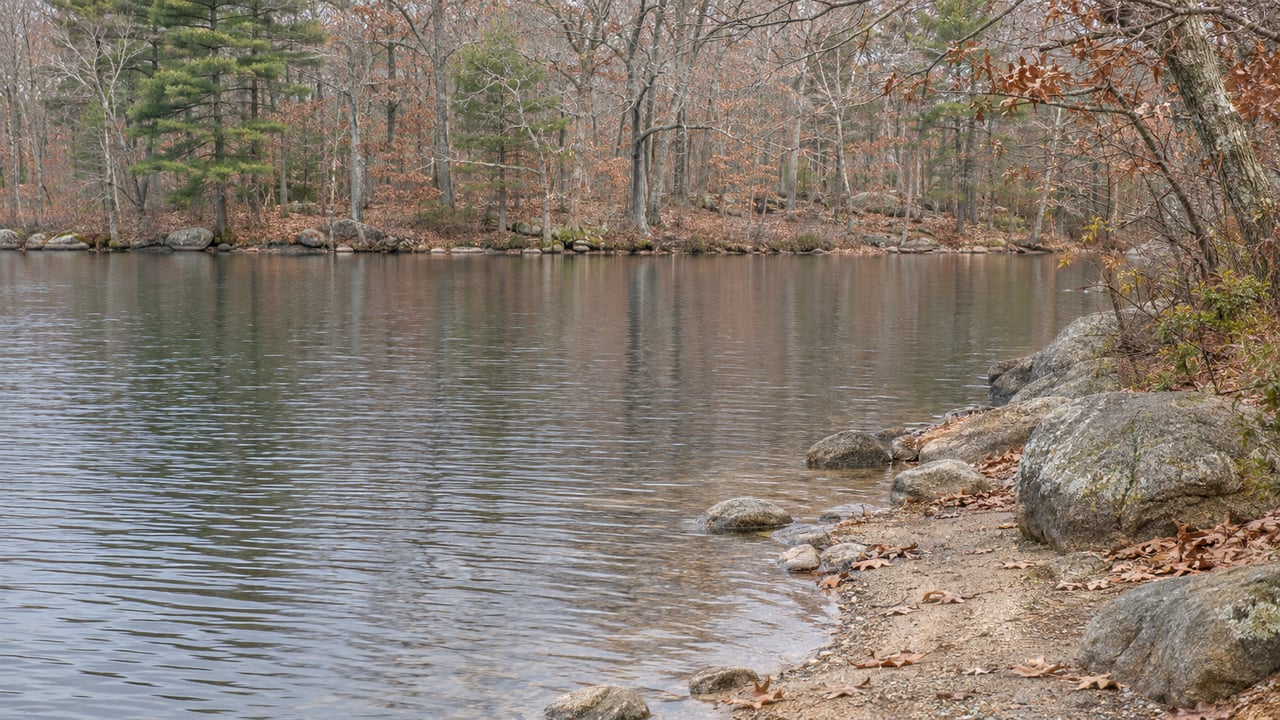
Why would a town lower a pond that spent the whole summer too low? In June, the Harvard Press reported rocks at or just below the surface in places that are normally navigable. Some residents blamed the low water for three recent minor boating accidents. Two boat slips and two moorings had to be moved farther out, and the swim buoys might have to go to deeper water. By fall the pond was still about 18 inches below its spring target.
On Oct. 1, the Harvard Conservation Commission approved a 6-foot winter drawdown anyway. More than 270 people had signed a petition asking for a 4-foot limit, and the Commission turned that request down. The usual summary is that the town picked weed control over water. The pond committee's own case is narrower. Once the water drops below the water table, how far below makes little difference to where the pond starts next spring. It makes a large difference to the fanwort and milfoil.
Why the pond was low before anyone touched the dam
The summer shortfall came from the sky. In a column it wrote for the Harvard Press, the Bare Hill Pond Watershed Management Committee explained the pattern. Spring groundwater recharge brought the pond back only to its natural water-table level, about three feet below "full." Getting higher than that takes rain, enough to cover evaporation and the dam's required outflow.
That rain never came. At the committee's June 8 meeting, committee Chair Bruce Leicher reported about 10 inches of precipitation through the end of May 2026. That is less than half the historical January through June average of 22.4 inches, and committee records going back to 1990 show no comparable year, according to the Harvard Press. In a normal year, an inch of rain can lift the pond by roughly 3 to 4 inches. This spring, the dry ground absorbed much of the rain that did fall.
The committee said groundwater refilled the pond in late winter and early spring at about the same rate as in earlier years. In its account, missing rainfall caused the gap above the water table, and the previous winter's drawdown did not.
The water table makes 4 feet and 6 feet closer than they sound
The petition was the first serious public challenge to the drawdown in years. A letter in the Harvard Press supporting a limited drawdown described stranded docks, exposed wetlands and lost habitat. It asked that fish, turtles, amphibians and waterfowl be weighed along with the invasive plants. The petition asked for a temporary 4-foot limit, more groundwater and environmental data, a review of permit compliance, and continued public discussion before the next management cycle, the Harvard Press reported in September.
The committee's answer rested on how the pond refills. At its Sept. 10 meeting, committee member Joe Pettirossi told the room that both proposals went below the water table, according to the Harvard Press:
"When you start to refill, you go back up to the water table … we'd be exactly where we are if last year we did a 4-foot drawdown."
In other words, groundwater brings the pond back up to roughly the same floor each spring whether it was lowered 4 feet or 6. Rain decides how far it climbs above that floor. A shallower drawdown would have cost the weed program its main tool, and in the committee's view it would not have filled the pond any higher in spring 2027.
The physical work follows the same split. Pulling the dam boards lets gravity drop the pond about three feet, down to the water table. Beyond that, a pump does the work, at 10,500 gallons per minute by the Harvard Press account. A required outflow pipe keeps sending about 1,000 gallons per minute downstream through wetlands toward Bowers Brook and the Nashua River.
What a deep drawdown does that a shallow one has not
Drawdown works by exposing the shallow pond bottom to drying and freezing. The town's invasive weed strategy says those exposed, frozen areas lose the most fanwort and milfoil, and repeated drawdowns cut the weeds back a little more each time.
The pond has recently tested both depths. Aquatic Restoration Consulting, an Ashburnham firm that has monitored Bare Hill Pond since at least 2019, surveyed shallow-water sites after a shallow winter and after deep ones.
| Winter drawdown | Fanwort, share of shallow survey sites | Milfoil, share of shallow survey sites |
|---|---|---|
| 2023–24, 2.5 feet | 97% | nearly 67% |
| 2024–25, 6.5 feet | about 22% | about 8% |
| 2025–26, 6.5 feet | similarly low | similarly low |
The ARC report, prepared by Wendy Gendron, also found the pond still had good recreational water quality in 2026. It listed low oxygen and phosphorus building up in deeper water as long-term concerns.
That table is why the Commission's vote came out the way it did. "We have a technique that works," commission member Britt Argow said, as quoted in the Harvard Press. "It does not work at 4 feet. [We have] 25 years of data to show that." Commission Chair Jim Burns said shallower drawdowns had proved less effective and no comparable alternative had been put forward.
Why "6 feet" and "6.5 feet" describe the same level
Residents who followed the debate saw both numbers, and the difference is only where you measure from. The pond committee measures from its spring refill target, 22 inches below the top of the dam. The Commission's "6 feet" is measured from the defined "full" level, 29 inches below the dam top. The committee's 2025–26 annual report treats them as the same water line. The Harvard Press first reported the approval as 6.5 feet and then corrected it to 6 feet.
The dry year also gave this drawdown a head start. With the pond already 18 inches below its spring target, Leicher said only 5 feet of water had to come out to reach the approved level. That leaves the pond at the same low point as last winter.
The winter schedule
The plan for the season, as published by the committee and the Harvard Press:
- Oct. 15. Lowering was scheduled to begin, with the level typically dropping about 1.5 to 2 inches a day, according to the Harvard Press notice board of Oct. 9. At that pace, five feet takes roughly five to six weeks.
- Late November. The committee's proposal aimed to reach the low point by Nov. 30 or the first hard freeze. The annual report says the pump would be used only once the water had fallen about 2.5 to 3 feet. It also caps pumping at 1.5 inches a day, below the permit's maximum of 3 inches a day.
- January. The pond committee goes back to the Conservation Commission to discuss whether conditions justify starting the refill early.
- On or before Feb. 1, 2027. Refill is planned to begin, with notice to the Commission and to abutters. The annual report calls a delay past that date unwise for habitat restoration.
Those dates are the plan as published. Progress since Oct. 15 is reported at the committee's own meetings. Its Oct. 26 agenda listed an "Update on Drawdown," and the Harvard Media Cooperative has posted the recording of that meeting.
What comes after this winter
The vote did not end the question. Commission member John Lee said this year might be an outlier, "but when you start to see consistent progression … then it's time to evaluate your data." This summer the Commission started gathering more information on how the pond responds to different conditions, working with hydrologists Martin Briggs and Danielle Hare. In its annual report, the pond committee says it is looking at what a test-well study would cost and require. It expects to bring a recommendation back late in 2026 or in January, and it says separating rainfall effects from drawdown effects will likely take several years of study.
Whether Bare Hill Pond comes back to its spring target in 2027 depends mostly on the rain between February and June. The committee's own figures show that a shallower drawdown would not have changed that.
For the Bare Hill Pond shoreline, the market conversation in Harvard runs on the season. A home on the water looks very different in a February drawdown than in a full June. If you own near the pond or are thinking about a place on its shore, The Naroian Group can walk you through how the drawdown schedule fits your timing. Book a local market consult.