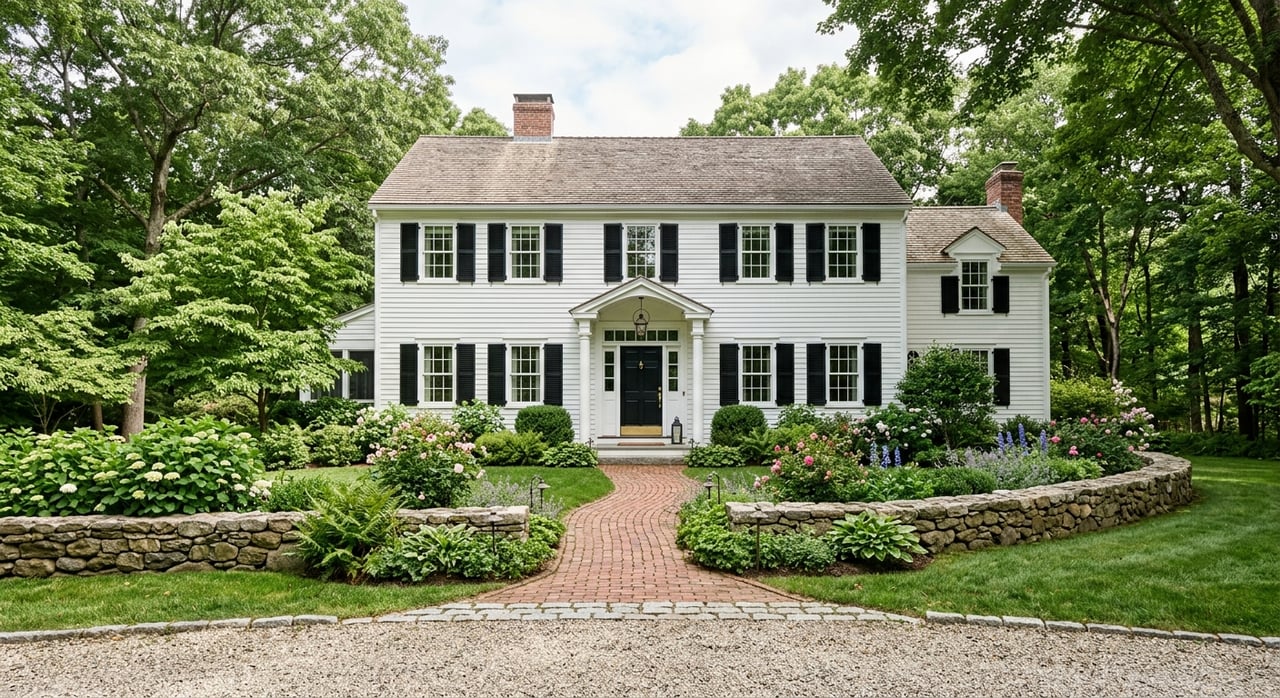
If you have started looking at homes in Andover, you have probably noticed something quickly: this town does not feel like one single neighborhood. One area may offer a village setting near rail access, while another feels more suburban and tucked into open space, and another centers around club amenities and luxury homes. Understanding those differences can help you search smarter, narrow your options faster, and focus on the parts of town that truly fit your lifestyle. Let’s dive in.
Why Andover Feels Like Several Markets
Andover sits about 23 miles north of Boston and offers access to I-93, I-495, Routes 28, 133, 114, and 125, along with two MBTA commuter rail stations. It is also a high-cost market, with the 2020-2024 ACS reporting a 79.9% owner-occupied rate and a median owner-occupied home value of $855,600. Those numbers help explain why buyers often approach Andover carefully and compare subareas closely.
The town also has a distinct physical layout. Andover includes about 32 square miles of land, and town materials note that most of its land area is zoned for single-family detached homes. At the same time, newer multifamily growth is being directed toward transit-oriented districts rather than spread evenly across town.
That means your experience of Andover may vary quite a bit depending on where you look. Some areas are more walkable and mixed-use, some are shaped by historic village patterns, and some lean more toward larger residential settings with access to open space or club amenities.
Downtown Andover and the Mill Corridor
For buyers who want a more connected, mixed-use setting, downtown Andover and the historic mill corridor are often the clearest place to start. This part of town includes the downtown core, the Historic Mill District, and the older Andover Village Industrial District.
The Historic Mill District spans nearly 100 acres between Main Street, Dundee Park, the Shawsheen River, and Whole Foods. Town history describes the older industrial district as factories and associated residences clustered around the Shawsheen dams, with those buildings now housing a variety of businesses and apartments. In practical terms, this area offers a blend of historic structure, evolving redevelopment, and proximity to daily conveniences.
The town’s Town Yard redevelopment adds to that story. Plans call for 165 housing units, 6,500 square feet of commercial space, a community building, and a public plaza. Essex Street improvements are also intended to strengthen the connection between downtown, the commuter rail station, and the mill district.
If you are drawn to a more walkable lifestyle, this area may deserve a closer look. It is one of the clearest examples in Andover of how historic character and newer housing growth can exist side by side.
Academy Hill, Central Street, and Main Street/Locke Street
If your priorities lean more toward established residential character, Andover’s historic core offers a different feel. Academy Hill, Central Street, and Main Street/Locke Street are important anchors in the town’s housing and preservation documents.
Academy Hill centers around the historic campus area of Phillips Academy, Abbot Academy, and the Andover Theological Seminary. Central Street is described by the town as the social and religious core of Andover’s fine residences and three churches. Main Street/Locke Street is described as a harmonious mix of fine residences just south of the central business district.
For homebuyers, these areas are best understood as part of Andover’s most architecturally established residential fabric. Rather than newer subdivision-style development, they reflect long-standing neighborhood patterns and a strong historic identity.
This can matter if you are comparing home styles, lot settings, and neighborhood atmosphere. In Andover, these sections often appeal to buyers who want a classic New England setting near the center of town.
Ballardvale for Village Character and Rail Access
Ballardvale stands apart because it combines historic village identity with commuter rail access. Town planning materials describe it as Andover’s first planned mill community and the town’s first local historic district.
The Ballardvale Historic District Commission helps keep changes harmonious with district character. That gives the area a distinct identity that many buyers notice right away. It also helps explain why Ballardvale feels more like a village within the town rather than just another residential section.
Transportation access is another big part of the story. Town materials identify Ballardvale as one of Andover’s two MBTA commuter rail stations, making it a practical option for buyers who want rail access without focusing only on the downtown core.
If your search includes terms like village feel, historic setting, or train access, Ballardvale is one of the clearest matches in Andover. It offers a combination that is not easy to find in every suburban market.
Shawsheen Village and Its Mixed-Use History
Shawsheen Village is another area with a strong identity rooted in history. It was built in the 1920s around the American Woolen Company mills and originally included housing, a post office, drug store, school, restaurant, creamery, railroad stations, garages, laundry, and recreational facilities.
Today, it is best understood as a historic village center with a mix of residential, business, and apartment uses. That mixed pattern is part of what makes it distinct from more purely residential sections of town.
The town’s Route 133 project is intended to improve the corridor from West Parish to Shawsheen Village with better mobility, sidewalks, crosswalks, and bicycle accommodations. For buyers, that points to continued attention on access and connectivity in this part of Andover.
If you want an area with a layered history and a blend of uses, Shawsheen Village may belong on your shortlist. It offers a different experience from the more residential west side or the club-oriented sections of town.
West Parish and West Andover
If you picture Andover as a more traditional suburban town with open space and trail access, the west side often fits that image best. West Parish Center is described by the town as a residential neighborhood clustered about West Parish Church.
This part of town also sits near major open-space resources and trail systems, including Harold Parker State Forest and the broader town trail network. Andover as a whole offers more than 5,000 acres of public outdoor space, including AVIS lands, the Shawsheen River, and Pomp’s Pond, but the west side is especially connected to that recreation-oriented identity.
For some buyers, this setting feels more relaxed and residential than the downtown and mill core. If your home search includes priorities like nearby trails, outdoor access, or a more suburban feel, West Parish and West Andover are important areas to explore.
Club Communities in Andover
When buyers ask about club communities in Andover, there are two names worth knowing. They are not the same, and understanding that difference can save you time.
Andover Country Club
Andover Country Club is the town’s clearest club-community option. The club opened in 1925 and 1926 on the Chandler Farm site and includes an 18-hole championship course and a 54,000-square-foot clubhouse.
Its real estate offerings are especially important because official club materials point to a range of residential options. These include luxury condominiums and estate homes, along with named communities such as The Homes at Andover Country Club, The Legends, Swan Crossing, Frenchman’s Reserve, and Clubview Estates.
For buyers who want a golf-course lifestyle with clearly defined residential options, this is Andover’s strongest example. It is the most direct fit if you are specifically searching for a club-centered housing environment.
Indian Ridge Country Club
Indian Ridge Country Club is another important lifestyle reference point in town. Located on Lovejoy Road, the club highlights golf, a pool, tennis, dining, and special events, with three clay tennis courts and two lighted hard courts.
Based on the available sources, Indian Ridge is best understood as a club-centered South Andover lifestyle anchor rather than a separately branded residential subdivision. In other words, it may shape buyer interest in nearby housing, but it should not be treated the same way as Andover Country Club’s more explicit residential inventory.
That distinction matters if you are trying to build a clean search strategy. One is a clearer residential community story, while the other is more about amenities and surrounding location appeal.
How to Narrow Your Search in Andover
Because Andover is not one uniform market, it helps to start with lifestyle priorities instead of trying to tour the entire town at once. A focused search usually leads to better decisions.
You can think about Andover in a few broad buckets:
- Walkable, mixed-use, and historic: Downtown, the Historic Mill District, Central Street, and Main Street/Locke Street
- Village character with rail access: Ballardvale
- Club-lifestyle luxury with defined residential options: Andover Country Club
- Club-centered South Andover setting: Indian Ridge area
- More suburban residential feel with open-space access: West Parish Center and the west side
There is also an important long-term housing trend to keep in mind. Town planning documents indicate that denser future housing growth is likely to be concentrated near transit-oriented areas, especially around the downtown commuter rail station and related corridor sites, while much of the rest of Andover remains primarily single-family in character.
A Note on Schools and Home Searches
If school access is part of your move, address-level verification is especially important in Andover. Andover Public Schools includes a preschool, five elementary schools, three middle schools, and Andover High School.
The district’s K-8 redistricting process will begin with the 2026-27 school year, and families are advised to use the address-based redistricting map to confirm assignments through 2029-30. That means it is better to confirm a specific property’s assignment than to rely on neighborhood shorthand.
This is one of the biggest reasons local guidance matters. A neighborhood label can help you understand feel and geography, but exact address details still matter when you are narrowing down homes.
If you are comparing neighborhoods, village areas, or club-oriented options in Andover, a local strategy can make the process much easier. Sandra Naroian offers experienced, relationship-driven guidance to help you evaluate location, housing style, and day-to-day fit with more confidence.
FAQs
What are the main neighborhood areas in Andover, MA?
- Key areas identified in town planning materials include Academy Hill, the Andover Village Industrial District, Ballardvale, Central Street, Main Street/Locke Street, West Parish Center, and Shawsheen Village.
Which Andover, MA area is best for commuter rail access?
- Ballardvale is one of the clearest options for village-scale rail access, and the downtown area also connects to commuter rail and transit-oriented planning.
What is the primary club community in Andover, MA?
- Andover Country Club is the town’s clearest true club-community option, with residential offerings that include luxury condominiums, townhomes, and estate-style homes.
How should buyers think about Indian Ridge in Andover, MA?
- Indian Ridge is best viewed as a club-centered South Andover lifestyle reference point, with nearby housing influenced by club access rather than a formally branded residential subdivision.
Which Andover, MA areas feel more suburban and outdoors-oriented?
- West Parish Center and the west side are commonly associated with a more traditional suburban feel and access to open space, trails, and recreation resources.
Should buyers use neighborhoods to estimate school assignments in Andover, MA?
- No. Andover Public Schools advises families to confirm assignments by exact address, especially with K-8 redistricting beginning in the 2026-27 school year.